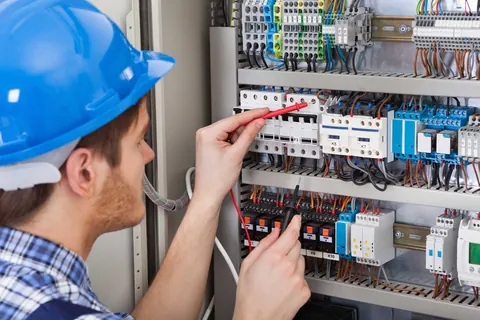
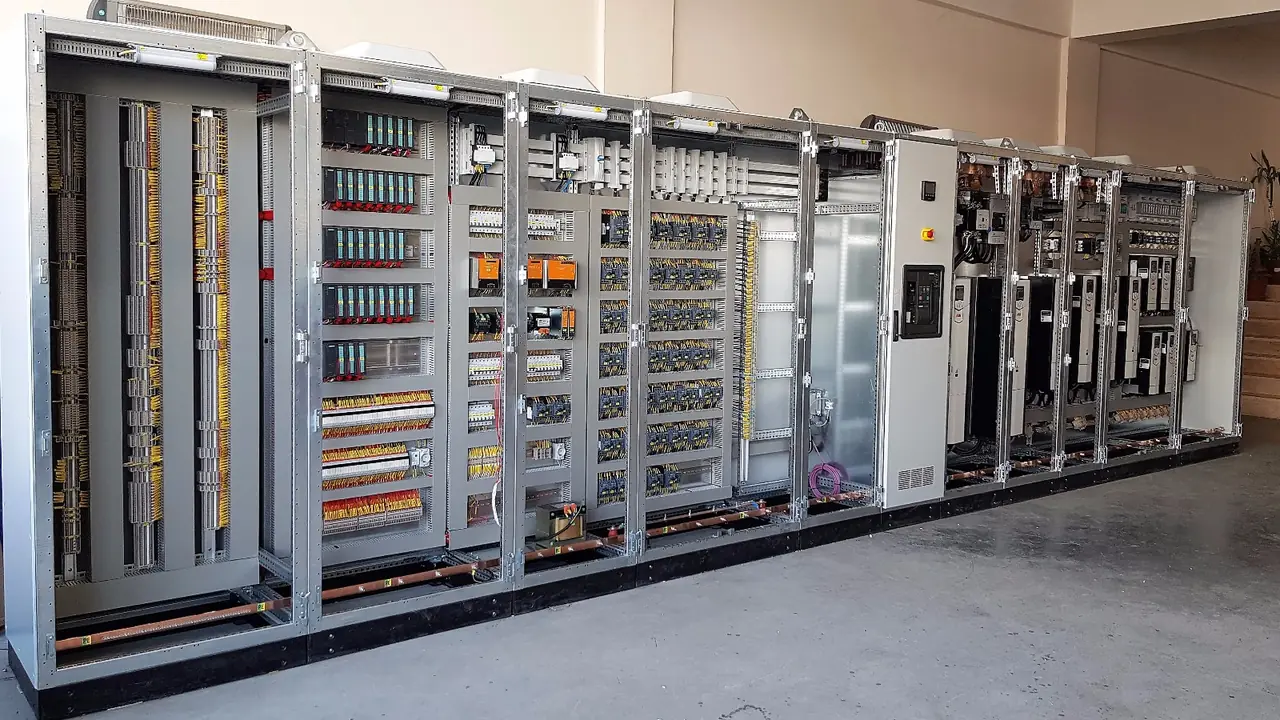
Control panels are where automation projects succeed or fail quietly. A well-built panel runs for years without attention. A poorly designed one trips on hot afternoons, is hard to fault-find and slows down every modification. Here is what good panel design looks like for UAE conditions.
Start with the standard: IEC 61439
Low-voltage assemblies such as MCC panels, distribution boards and many control panels fall under the IEC 61439 series. Part 1 sets general rules and Part 2 covers power switchgear and controlgear assemblies. The standard requires design verification, for example temperature rise and short-circuit withstand, and routine verification of each panel built. Ask your panel builder how verification is done and what records you receive.
Purely control panels may also follow IEC 60204-1 when they are part of machinery. The specification should state which standards apply.
Heat: the biggest risk in the UAE
Every drive, power supply and PLC module produces heat. In a closed panel the heat must go somewhere, and in summer the outside air may already be above 45 °C. The design steps are:
- Add up the heat losses of all components at their real load.
- Decide the maximum internal temperature the components allow.
- Calculate whether natural ventilation, filter fans or a panel air conditioner is needed.
- Allow for sun load on outdoor panels, or shade them.
Drives are usually the largest heat source, so read VFD selection for UAE heat alongside this guide.
IP rating and the environment
The IP rating (IEC 60529) defines protection against dust and water. Dust is the bigger issue in most UAE sites. A higher IP rating keeps dust out but also traps heat, which is why the cooling method and IP rating must be chosen together.
Layout that helps maintenance
- Separate power and control sections, and keep signal cables away from motor cables.
- Leave around 20 percent spare space and spare terminals for future changes.
- Place components that need adjustment or replacement at a comfortable height.
- Use clear cable ducts, ferrules and terminal numbering that match the drawings.
Labelling and drawings
Every wire, terminal and device should carry a label that matches the schematic. Keep a laminated copy of the drawings in the panel pocket and hand over editable drawing files. Good labelling cuts fault-finding time dramatically.
Factory acceptance test
Test the panel in the workshop before delivery: visual inspection, wiring continuity, insulation resistance, power-up, I/O checks with the PLC program and safety circuit tests. Invite the client to witness it. Problems found at FAT are cheap to fix.
On-site installation and testing
After delivery, check for transport damage, tighten terminations, test insulation again and run the site acceptance test with the real field devices. If you are replacing an old panel, plan the cutover the same way you would a PLC migration.
Synthronix designs, builds and commissions PLC, VFD and pump control panels for UAE sites. See our industrial automation service or ask for a quotation.