In UAE towers, residents notice the booster pumps only when something goes wrong: weak showers on high floors, banging pipes, or pressure that swings during the morning peak. Most of these issues come back to sizing and control.
Step 1: estimate the demand flow
Peak demand is not the sum of every fixture flowing at once. Designers use fixture units or loading units from the plumbing code applied to the project to estimate probable peak flow. The result depends on building type: residential towers peak in the morning and evening, offices around working hours, hotels at check-out times.
Step 2: calculate the required pressure
The pump must deliver enough pressure for the highest outlet to work properly. The calculation includes:
- the static height from the tank to the highest fixture,
- friction losses in pipes, fittings, valves and meters at peak flow,
- the minimum pressure needed at the fixture.
Step 3: plan pressure zones
In tall buildings, one pump cannot serve every floor without over-pressurising the lower ones. The building is split into zones, served by separate pump sets or by pressure-reducing valves. Wrongly set or failed PRVs are a frequent cause of complaints.
Step 4: choose the pump set arrangement
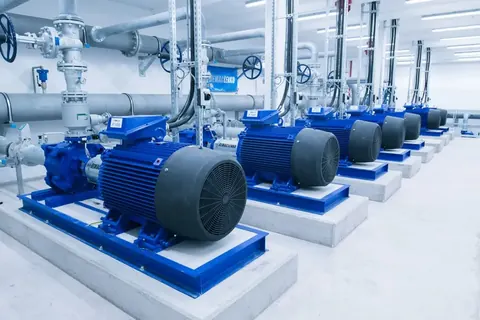
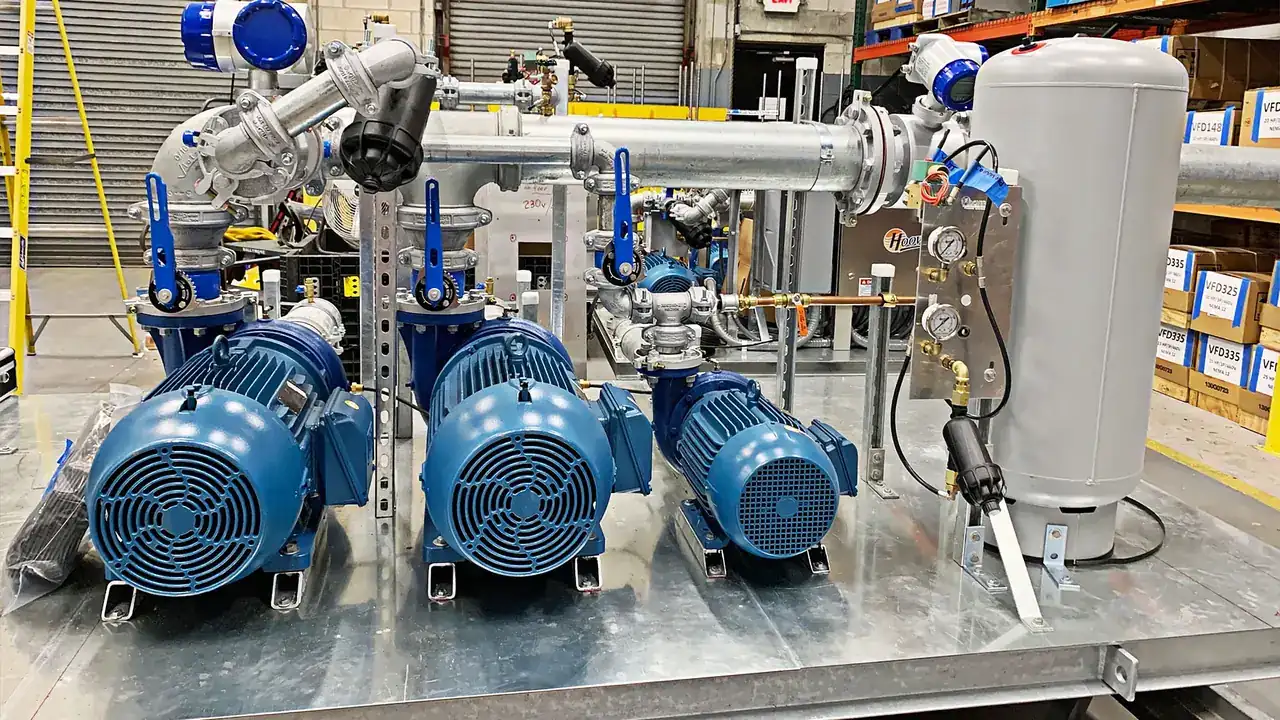
A typical booster set has two or three pumps on a common base with a controller. One pump runs as duty, another assists at peak demand, and one stays on standby. The controller rotates the pumps to spread wear.
Step 5: use variable speed control
Variable frequency drives adjust pump speed to hold a constant outlet pressure. Benefits include steady pressure, fewer pressure surges, lower energy use and less wear. Settings such as minimum speed, sleep mode and pressure ramp matter. See VFD selection for pumps.
Step 6: protect the pumps
- Low-level protection on the suction tank to prevent dry running
- Pressure vessels sized to reduce short cycling at low demand
- Non-return valves and isolation valves on each pump
- Alarms to the BMS for pump faults, high and low pressure and low tank level
Troubleshooting existing systems
Before replacing pumps, measure. Record pressure at the pump outlet and at several floors during peak demand, check the controller settings, inspect strainers and PRVs, and check pump condition. Often a controller retrofit or a PRV adjustment solves the problem at a fraction of the cost. Keep the system healthy with a preventive pump maintenance checklist.
Synthronix supplies, installs and commissions booster pump sets and VFD pump control panels. See our pump systems service.