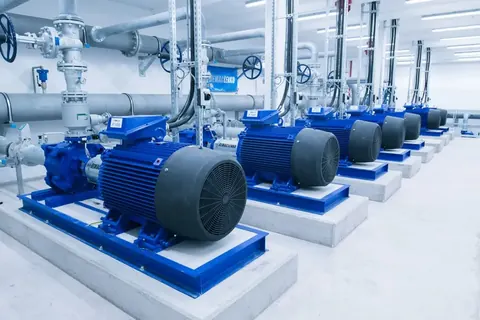
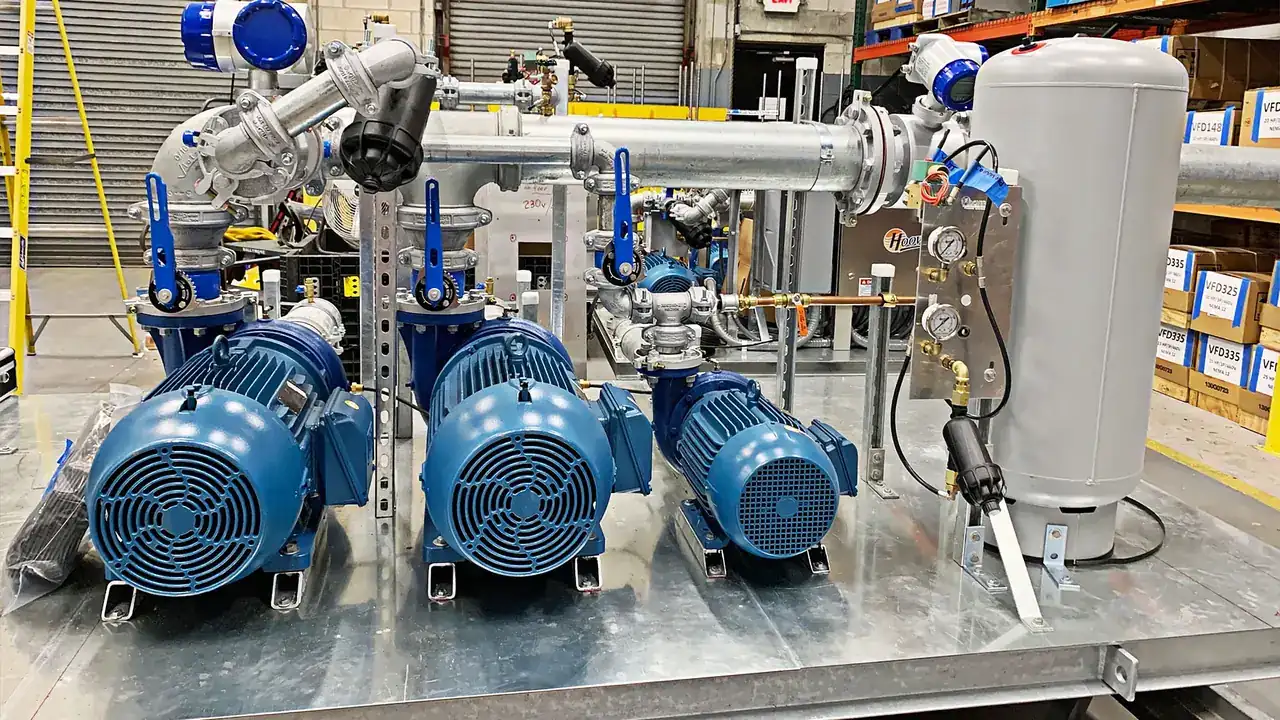
Pumps rarely fail without warning. Bearings get noisy, seals start to drip, motors run hotter and controllers log more starts. A preventive routine turns those signs into planned repairs instead of emergency call-outs.
Weekly or monthly checks
- Listen for unusual noise and feel for vibration on pumps and motors.
- Check mechanical seals and gland packing for leaks.
- Read suction and discharge pressure gauges and compare with normal values.
- Check controller displays and alarms; note run hours and number of starts.
- Confirm duty and standby rotation is working.
- Check pump room ventilation and temperature, which matters in UAE summers.
Quarterly checks
- Measure motor current on each phase and compare with nameplate and previous readings.
- Measure bearing temperatures.
- Clean strainers and check pressure vessels’ pre-charge.
- Test low-level protection and pressure switches.
- Clean VFD and panel filters and check cooling fans. See VFD care in UAE heat.
- Check that alarms reach the BMS or SCADA.
Annual service
- Check shaft alignment between pump and motor.
- Test motor insulation resistance.
- Inspect couplings, bearings and lubrication as the manufacturer recommends.
- Tighten electrical terminations and check for overheating.
- Verify pump performance against its curve where test points allow.
- Review controller and VFD settings against the commissioning record.
Keep records
Record readings in the same format every visit. Trends are more useful than single values: a slow rise in vibration or current tells you a bearing or impeller is wearing well before it fails.
Fire pumps are different
Fire pump sets follow their own inspection and testing schedule under NFPA 25 and the approved fire protection maintenance programme. Read fire pump systems: NFPA 20 basics for more.
When to upgrade instead of repair
If a pump set fails often, consider whether it was sized correctly and whether the controls suit the building. Our guide to booster pump sizing helps with that review.
Synthronix provides pump maintenance contracts, repairs and controller upgrades for booster, transfer and fire pump sets. See our pump systems service.