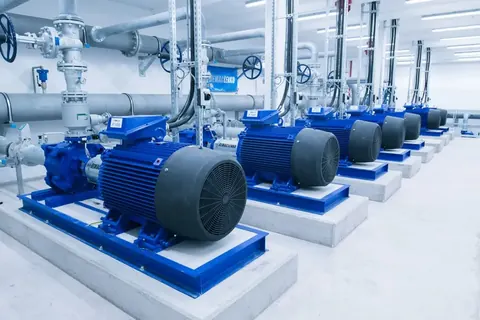
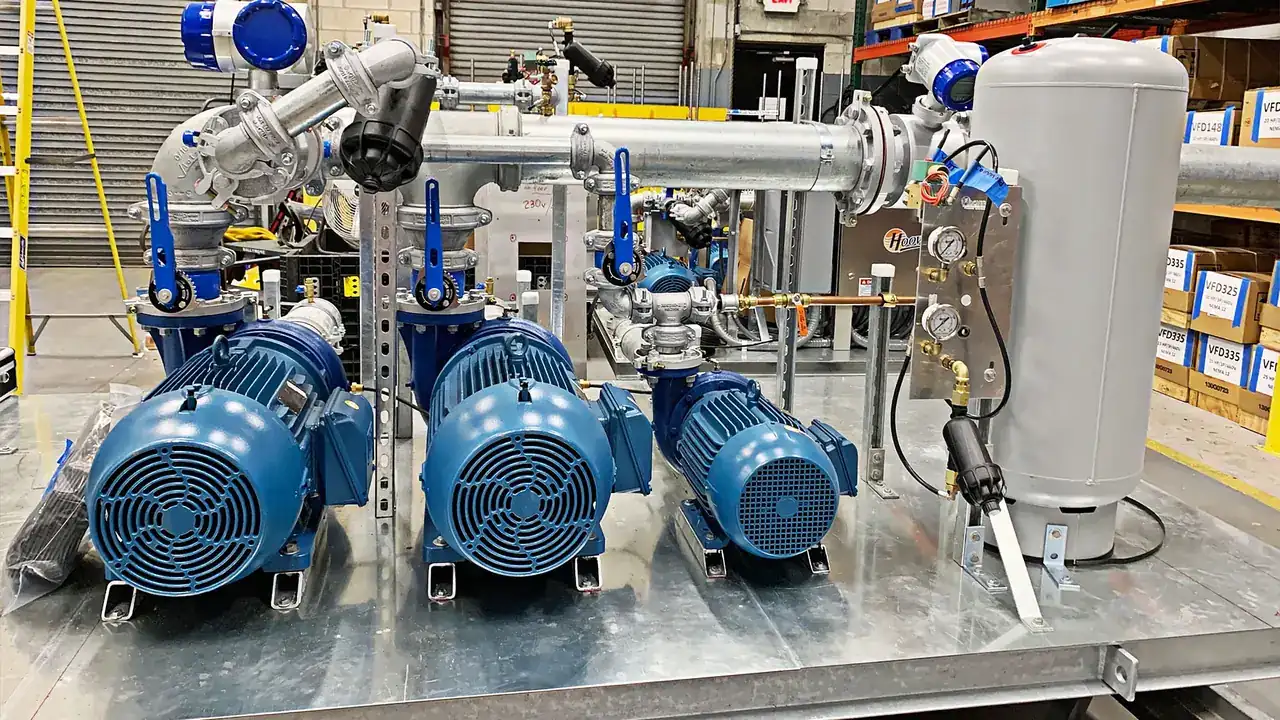
Sprinklers, hydrants and hose reels all depend on the fire pump set. It is one of the few pieces of equipment in a building that must work perfectly after long periods of doing nothing. That is why fire pumps follow strict standards and approvals.
Standards and approvals
NFPA 20 covers the installation of stationary fire pumps, and NFPA 25 covers inspection, testing and maintenance of water-based fire protection systems. In the UAE, fire protection design follows the UAE Fire and Life Safety Code of Practice and is approved by the relevant Civil Defence authority. Equipment is typically required to be listed or approved for fire service. The approved design for the building is the final reference.
Main components of a fire pump set
- Main fire pump: electric motor or diesel engine driven, sized for the system’s rated flow and pressure.
- Standby pump: often a diesel pump, so the system works if electrical power fails.
- Jockey pump: keeps the system pressurised and prevents false starts of the main pump.
- Controllers: fire pump controllers listed for the purpose, with automatic start on pressure drop.
- Test header and flow meter: to prove pump performance during testing.
How the pumps start
Each pump has a pressure setting. When a sprinkler opens or a hydrant is used, pressure falls. The jockey pump starts first for small drops. If pressure keeps falling, the main fire pump starts automatically, then the standby pump if needed. Fire pumps are designed so that once started automatically, they keep running until stopped manually.
Installation points that matter
- Suction conditions: the pump should have positive suction from a dedicated fire water tank where possible.
- Pipe sizes and valves as required by the standard and the approved design.
- Reliable power supply arrangements for electric pumps.
- Fuel supply, exhaust and cooling for diesel pumps, with ventilation suited to UAE heat.
- Pump room access for testing and maintenance.
Acceptance testing
Before handover, the pump set is tested at no flow, rated flow and peak flow to confirm it meets its rated curve. Automatic starting, controller alarms, power transfer and diesel engine operation are all checked. The authority or the consultant typically witnesses the test.
Routine testing and maintenance
Following NFPA 25 and the approved maintenance programme, pumps are run regularly without flow, flow-tested annually, and inspected for leaks, vibration, battery condition and fuel levels. Our pump maintenance checklist covers the general mechanical checks.
Synthronix supplies, installs and commissions pump sets including fire pump packages within approved fire protection designs. See our pump systems and MEP contracting services.